Neeva: The revolutionary, ad free search engine created by former Google employees
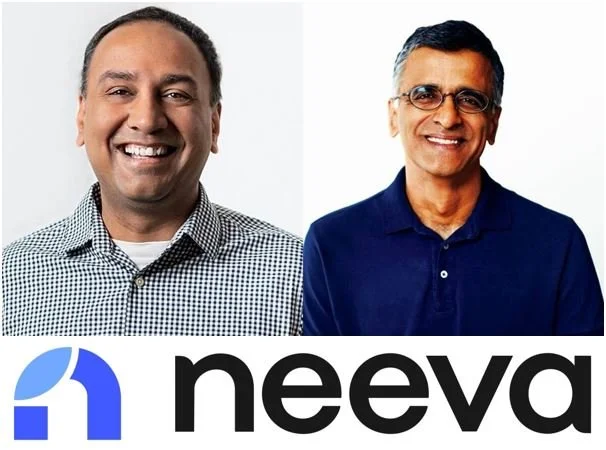
Vivek Raghunathan and Sridhar Ramaswamy, former Google employees who founded their potential competitor in search, Neeva.When we think search, we think Google. The Goliath of all search engines, Google has maintained a 92.05% market share in search engines as of February 2021. Google has destroyed all ‘Davids’ that have challenged them so far, such as Bing, Yahoo, Yandex and DuckDuckGo. However, a new David has emerged from the shadows, one called Neeva, with a revolutionary idea which can enable them to steal some market share from Google and perhaps even overcome Goliath.
Neeva was founded in 2019 by Sridhar Ramaswamy ( Ex-SVP of Ads at Google) and Vivek Raghunathan (Ex-VP of Monetization at YouTube). Sridhar was part of the early engineering team that built Google Search, and later transitioned to lead Google’s advertising products, which accounts for a huge share of the company’s revenue. Perhaps ironically, after helping to build the company and make it into the massive advertising power it is today, he quit Google in 2018 because he believed ads detract from a good search experience. Vivek was also in a similar position to Sridhar, leading ads-based monetization for the biggest video streaming platform in the world, YouTube. They both knew each other through Google and came up with the idea of Neeva through hikes and coffee.
Sridhar believes that Neeva is the perfect search engine to overthrow Google as, if we look into the past, subscription-based setups have disrupted former ads-based superpowers in many different markets. ‘In the history of business, there has never been a company that’s commanded 90+ percent market share in a market that’s $100+ billion. If you look at previous cases of what has disrupted them? It is typically a subscription play. What did HBO do to Time Warner? What did Netflix do to ad-supported television? What did Amazon Prime do to traditional e-commerce?’ (From Sridhar Ramaswamy’s interview with CNBC).
A very bold move. Two people who could have just stuck with the winning side and certified their careers risking it all to try and overtake the very company they worked for. Let’s have a look at the likelihoods of this success story taking place, and the pros and cons of using an ad free subscription based search engine like Neeva.
Once you have paid the subscription fee for Neeva, it is completely ad-free. Advertisements can be slightly disruptive to your searching experience especially the same ones repeatedly popping up over and over again on your page. Neeva promotes a completely ad-free search experience, free of distractions and unintended social consequences. Google collect huge amounts of data from your search history, preferences etc., and the sheer amount they collect is scary. We are in a time where companies like Google and Facebook are under pressure as people grow more aware of the data privacy issue. Neeva reassures users by stepping back from obsessive data collection and targeting to just provide a simple, secure search engine.
Neeva helps to filter out the advertisement results that come when you search up something on Google due to those companies striking deals with Google to be the first result on different key search terms. With Neeva, you would be able to get the exact search results you want, rather than the ones advertisers want you to see. This helps create an ideal searching experience for research, shopping and more as you are able to find specific things very conveniently.
Now, down to the negatives of picking a search engine like Neeva over Google. Neeva is a subscription based model, and therefore would require every customer to pay $5-10 a month to unlock this search engine. Our population is used to having the web at our fingertips, free of charge. It is very convenient to have such an efficient access to search, as everyone with a device at their grasp can access it. We have seen subscription based models thrive against free services before, however, such as Netflix and Television, but the web is so widely scaled that it seems hard to believe that a $10 a month service can thrive over something so accessible for your daily needs. Neeva seems better suited to a research and study based platform, as if I wanted to know general information I wouldn’t mind a bit of advertisement and commercialisation as long as I find a relevant piece of info or product, which Google does deliver. Sometimes advertisement and data collection can actually contribute to your experience too. If Google makes a decision on what product to advertise based on your search history, contact info, usage data etc., then that product could be really helpful towards you. With data, Google can help build a better experience for you, suggesting products you never knew you needed or creating a system tailored to your preferences, which could also go towards a better searching experience.
Neeva could well challenge Google in this market. It would be a monumental achievement, knocking a competitor like Google off their throne, but it’s no easy journey. Neeva need to focus on development of their brand. They don’t take into account how things like data collection can better someone’s searching experience, and that is the reason many people still use Google today. It won’t be a simple task, and in order to steal some market share and grab people’s attention, Neeva should have something more than just an ad free search engine. Something that would make them stand out, and convince people to pay the subscription fee. That being said, there is talk of Neeva being a potential takeover target for Apple, which is huge for both companies, as Neeva can use this opportunity to further develop their search engine as much as possible, and Apple can challenge Google in yet another market, meaning Google won’t be used in Safari and Apple will be able to benefit from the theoretical success of Neeva being the default engine for Safari in this case. The company definitely holds a bright future, and it would be interesting to see how far they make it.